The rising cost of climate risk — and why smart businesses are taking action now
Read time: 2 minutes
Read time: 2 minutes
Climate risk isn’t a far off environmental issue anymore. It’s something affecting day to day business decisions, financial resilience, and long term growth. The encouraging part is that there are practical steps every organisation can take to stay ahead of the curve.
We’re all seeing the impact.
The floods across the UK in early 2025 forced many businesses to close their doors, made sites unsafe, and caused costly damage to property, assets and production, whilst disrupting deliverability of products and services.
Then came summer 2025, the hottest on record, bringing extreme heat and drought that disrupted operations and made working conditions tough— especially for colleagues with existing health challenges.
And it’s not just the UK. Around the world, storms, floods and wildfires are disrupting communities and supply chains. Financial institutions are also factoring climate vulnerability into credit decisions, asset valuations, and insurance pricing, which means climate readiness is becoming a financial priority as well as an operational one.
When we work with organisations on their sustainability or ESG strategy, the starting point is often practical: reducing costs, responding to customer expectations, or improving efficiency. But the businesses that build real resilience recognise something bigger:
Climate risk is a strategic risk - and it deserves the same attention as any other board level issue.

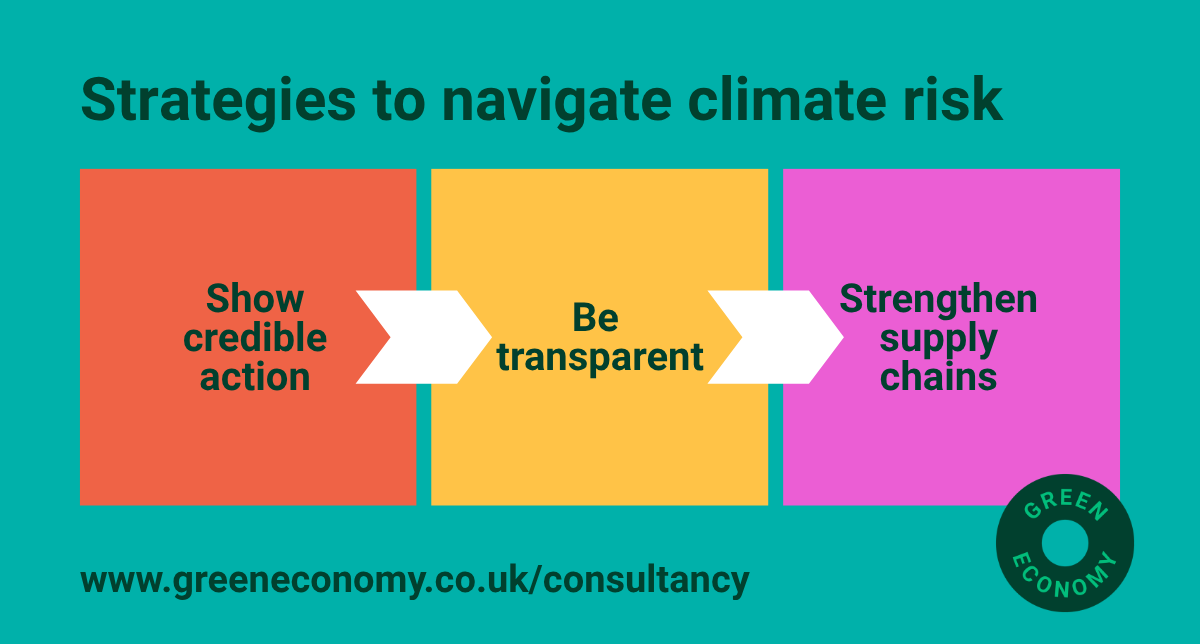
Here's where many leaders are focusing their efforts:
Get started by understanding your carbon footprint and setting science-based targets, so you can drive forward the most results orientated activity. Resource efficiency, renewable generation, nature-based solutions and insetting within your supply chain are powerful ways to demonstrate tangible results.
Good reporting builds trust — and increasingly, it’s a requirement for working with major clients, public sector organisations, and tier one supply chains.
Mapping climate related risks helps you anticipate disruption, diversify where needed, and keep operations running smoothly when extreme events hit.
Mitigation is our first defence against climate risk and taking steps to reverse climate change is our priority, but adapting to the current climate is also essential. Businesses that reduce their carbon footprint, whilst simultaneously assessing climate risk will be more stable, more competitive, and better positioned to grow in a changing world.
Climate risk isn’t a sustainability side project. It’s a core business issue - and the organisations that act early will be the ones that thrive.
Need support? Green Economy can help your business assess climate risk and implement practical solutions. Explore how we can help you leverage sustainability to grow your business here.
Get impartial end-to-end support when investing in
renewables and energy efficiency technologies.
Use our free Carbon Calculator to get an accurate picture of
your organisation's carbon footprint.

Search our Marketplace to find a trusted partner
for your green tech investment.

We are a social enterprise building a more sustainable economy, powered by local suppliers. We help organisations leverage sustainability to grow, while helping green tech and environmental services business win new business in their local area.
If you're interested in exploring how we can help your business grow, get in touch and one of our expert advisors will be happy to help.

28 April 2026
Choosing sustainable suppliers means looking beyond price to assess environmental performance, resilience, credibility, and long-term fit.
17 February 2026
An explanation of UK net zero grants and funding options, including eligibility considerations, regional differences and how funding fits into wider decarbonisation planning.

22 April 2025
The first-mover advantage in the net zero race has long been surpassed. Now, the market is ripe with organisations flaunting their sustainability strategies, eco-friendly products, and green pledges. Here are some tips to help you cut through the noise and demonstrate your impact.
Share
Written by
